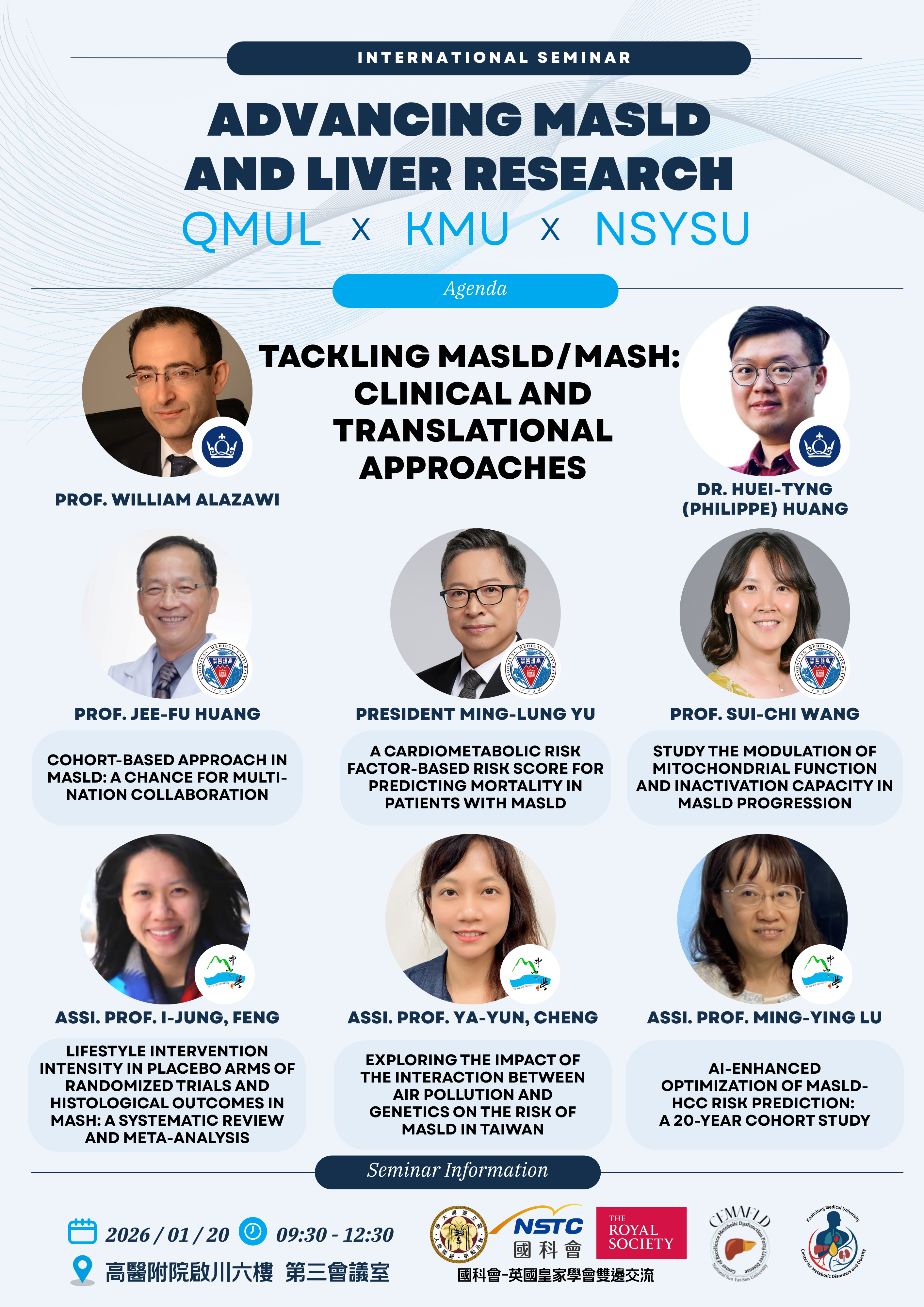
International Seminar: Advancing MASLD and Liver Research
(QMUL × KMU, CMDO × CEMAFLD, NSYSU | January 20, 2026)
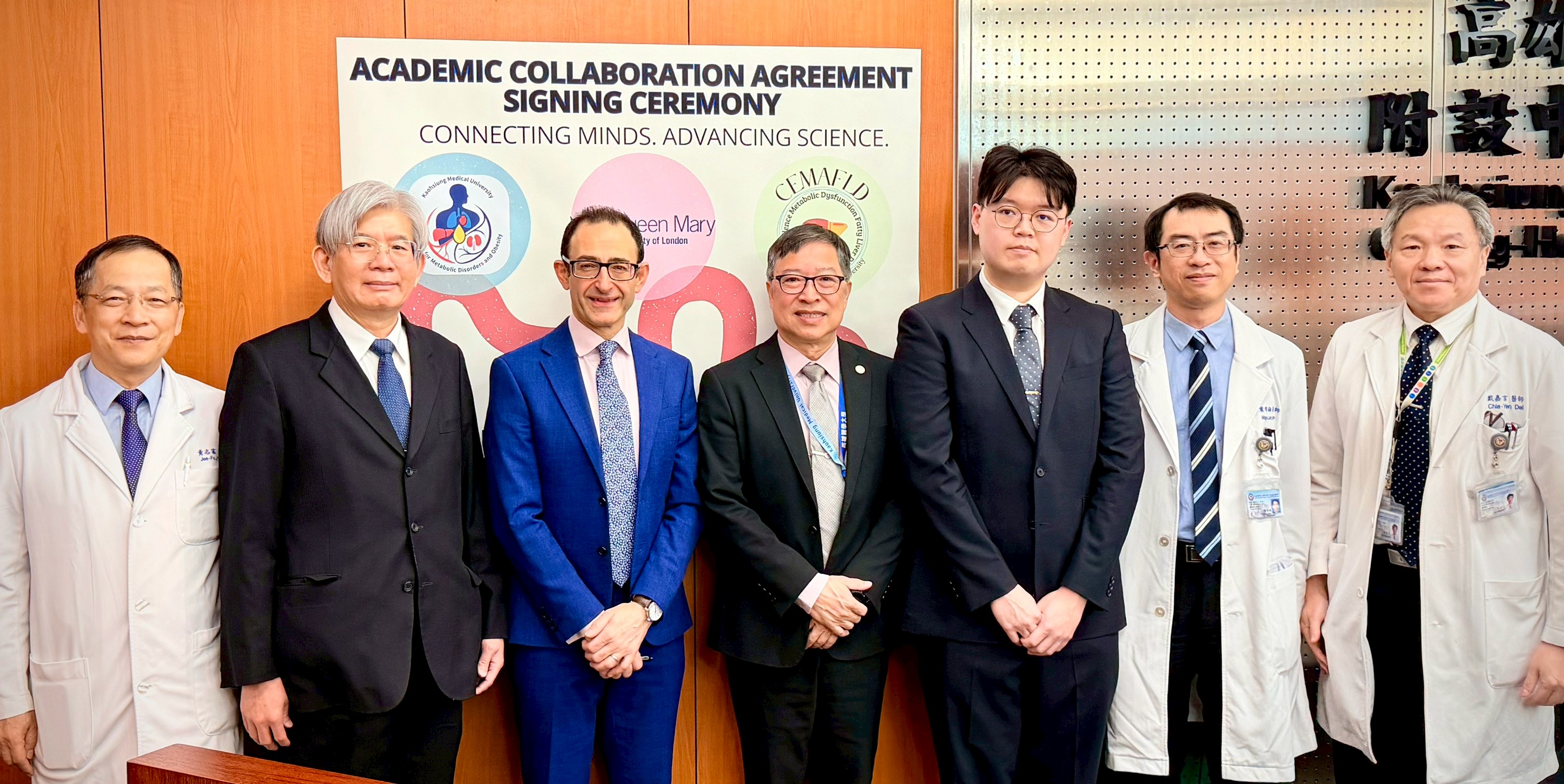
To strengthen international collaboration in research on metabolic dysfunction–associated steatotic liver disease (MASLD) and related liver disorders, the Center for Metabolic Disorders and Obesity (CMDO), Kaohsiung Medical University, and the Center of Excellence for Metabolic Associated Fatty Liver (CEMAFLD), National Sun Yat-sen University, formally signed a Memorandum of Understanding (MOU) with Queen Mary University of London (QMUL) on January 20, 2026.
The MOU signing was held in conjunction with an international academic seminar, marking a substantive starting point for structured and long-term academic collaboration between the institutions.
This meeting represented a major milestone in establishing the collaborative framework among the participating institutions. The scientific program closely reflected the core objectives outlined in the MOU, with a focus on the clinical relevance of MASLD, risk stratification for disease progression, immune–metabolic interactions, and the application of real-world data in disease prediction and patient stratification.
Discussions throughout the seminar were grounded in clinical practice and real-world evidence, offering a re-evaluation of the role of MASLD in both public health and clinical care. Speakers emphasized that MASLD should not be regarded as a single disease entity, but rather as a disease continuum driven by metabolic dysfunction, immune dysregulation, and multi-organ interactions. A central theme was the identification of populations at highest risk for disease progression and determining the most effective timing for intervention. This perspective strongly resonated with the principles of early risk stratification and precision prevention.
From a mechanistic standpoint, the seminar highlighted recent advances in understanding the hepatic immune microenvironment, metabolic stress, and impaired tissue repair. These insights demonstrated that MASLD progression is not merely the result of hepatic fat accumulation, but rather the outcome of complex and interconnected biological pathways. Integrating clinical data with tissue-level analyses and multi-omics approaches was identified as a key strategy for elucidating disease heterogeneity and underlying mechanisms.
In addition, drawing on research experience from the United Kingdom, speakers addressed how health inequalities substantially influence the prevalence, progression, and outcomes of MASLD and metabolic diseases. The discussions underscored the importance of cross-national comparative studies across diverse populations and healthcare systems. Taiwan’s comprehensive National Health Insurance system and high-quality clinical databases were highlighted as highly complementary to UK real-world data, providing a robust platform for international validation of risk models and collaborative research initiatives.
Overall, this seminar substantially strengthened exchanges between basic and clinical MASLD research and clearly defined future directions for international collaboration with QMUL. The organizers anticipate that this academic dialogue will continue to advance MASLD research from isolated findings toward systematic integration, ultimately facilitating meaningful translation into clinical practice and public health applications.
Meeting Information
Title:
International Seminar: Advancing MAFLD and Liver Research
(QMUL × KMU × CEMAFLD, NSYSU)
Date:
Tuesday, January 20, 2026
Time:
09:00–14:00
Venue:
3rd Conference Room, 6th Floor, Chi-Chuan Building
Kaohsiung Medical University Chung-Ho Memorial Hospital
Organizers:
-
The Center of Excellence for Metabolic Associated Fatty Liver (CEMAFLD)
National Sun Yat-sen University -
Center for Metabolic Disorders and Obesity (CMDO)
Kaohsiung Medical University